What's New in SoHo: Restaurants, Sidewalks & Crowds
August 13, 2026
August 13, 2026
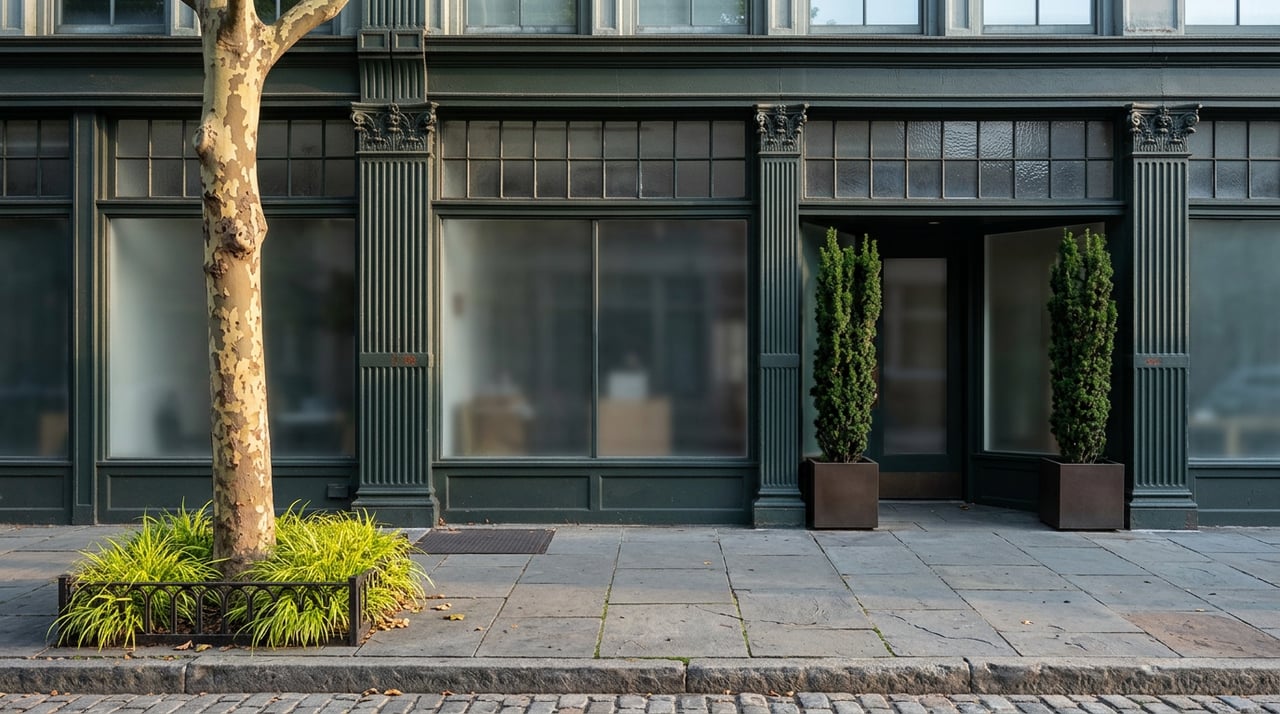
By 4:25 on a weekday afternoon, a line has already formed outside 450 West Broadway. It isn't for a store. It's for a table at Or'esh, the Levantine restaurant that opened here in February, and the host won't start taking names until the exact same time every day. A block away, on a Broadway corner that most people cross without looking down, the city has quietly swapped out the black trash bags for something new: sealed bins with green roofs, planted with summer blooms.
Nobody is lining up for the bins. But they may be the more telling story of what's happened to SoHo this year. SoHo's restaurant scene has drawn crowds, while the people who steward its sidewalks have been responding to the demands of a busy corridor.
SoHo's dining scene has drawn crowds, and limited reservation availability can mean lines on the sidewalk.
Or'esh set the pattern. It opened February 10 in the former Principe space on West Broadway, near sister restaurant The Corner Store, with chef Nadav Greenberg (who helped lead Shmoné to a Michelin star before this project) running an 80-seat dining room designed by David Rockwell's firm. Reservations release exclusively through DoorDash, seven days out, at 9am sharp. Walk-ins are possible but limited, which is why the line outside starts forming most afternoons before 4:30.
The Corner Store, which opened in 2024 and is still one of the hardest tables in the city to book, runs a similar system: reservations two weeks out, no walk-in tables at all beyond a 13-seat bar near the entrance. On a typical evening, the line for that bar starts around 4pm and winds around the block by dinner service.
Dean's, the coastal British spot from the team behind Dame, tried a different approach when it set up next door to its sister restaurant. It holds most tables and all eight bar seats for walk-ins, releasing only a portion of reservations two weeks ahead at 9am. The looser system hasn't spared it from demand. The Infatuation clocked a wait of about sixty minutes for a two-top on a recent Wednesday evening at 6pm.
Three different booking systems, three different restaurants, and the same outcome: people standing outside on the sidewalk, sometimes for an hour, at the exact time of day when SoHo's foot traffic is already at its peak.
SoHo Broadway Initiative, the neighborhood improvement district that has managed sidewalk conditions along the corridor since well before this restaurant boom, has spent the summer addressing trash bags piling up on corners, where they compete for space with pedestrians and dinner lines.
In June, the district installed a new run of sealed bins made by Citibin, each with a green roof, at corners along Broadway and its cross streets. SoHo Broadway was the launch customer for that particular bin model. New planters with ornamental shrubs went in alongside them, adding a bit of green to curb extensions that used to just hold garbage bags waiting for pickup. The stated goal, according to the initiative, is straightforward: keep trash off the sidewalk corners and out of the way of the pedestrians who already have to navigate them.
Mark Dicus, who has run the initiative since 2014, has overseen a broader vision plan for years aimed at giving SoHo's sidewalks back to the people walking on them instead of the cars and clutter competing for the same six feet of pavement. The bins are a small piece of that plan, arriving amid SoHo's busy restaurant scene and crowded evening sidewalks.
None of this means SoHo has a trash problem the restaurants caused. It means the neighborhood's stewards are treating pedestrian flow as infrastructure worth investing in, right as that flow has never been more strained.
Not everything opening in SoHo this year wants you to stand outside for an hour. A few recent arrivals are built around the opposite idea.
If the pattern holds, SoHo's next wave of openings may keep splitting in this direction: high-demand dinner spots that generate sidewalk lines, and lower-key daytime or hotel-adjacent concepts that don't.
There's a detail about SoHo's sidewalks that has nothing to do with restaurants and everything to do with how long people have been fighting for space on this pavement. At the northwest corner of Broadway and Prince, in front of the Prada store, there's a chiseled design carved directly into the sidewalk stone. It's easy to miss among the foot traffic. The artist, Ken Hiratsuka, carved it secretly at night in 1984, back when SoHo's streetlights were blown out and the neighborhood looked nothing like it does now, working bit by bit with a lookout posted nearby out of fear of being caught.
Forty years later, the sidewalk is still the thing everyone's fighting over, just for different reasons. The Drawing Center, the SoHo exhibition space founded in 1977, is running a quieter alternative through September 27: an exhibition of works on paper by Pope.L that doesn't require a 9am alarm or a DoorDash account, just a walk-in during gallery hours.
SoHo's restaurant scene will keep producing headlines this year. The sidewalk underneath it, and the people responsible for keeping it walkable, are doing the less glamorous work of making sure the neighborhood can accommodate its busy sidewalks.
If you're weighing what a home in a neighborhood like this is really worth, both the buzz and the quieter infrastructure behind it matter. Anna Coatsworth has spent 25 years reading Manhattan blocks this closely, and welcomes a conversation with anyone curious about what SoHo's current moment means for property values here.


Get assistance in determining the current property value, crafting a competitive offer, negotiating a sale, and much more. Contact me today.