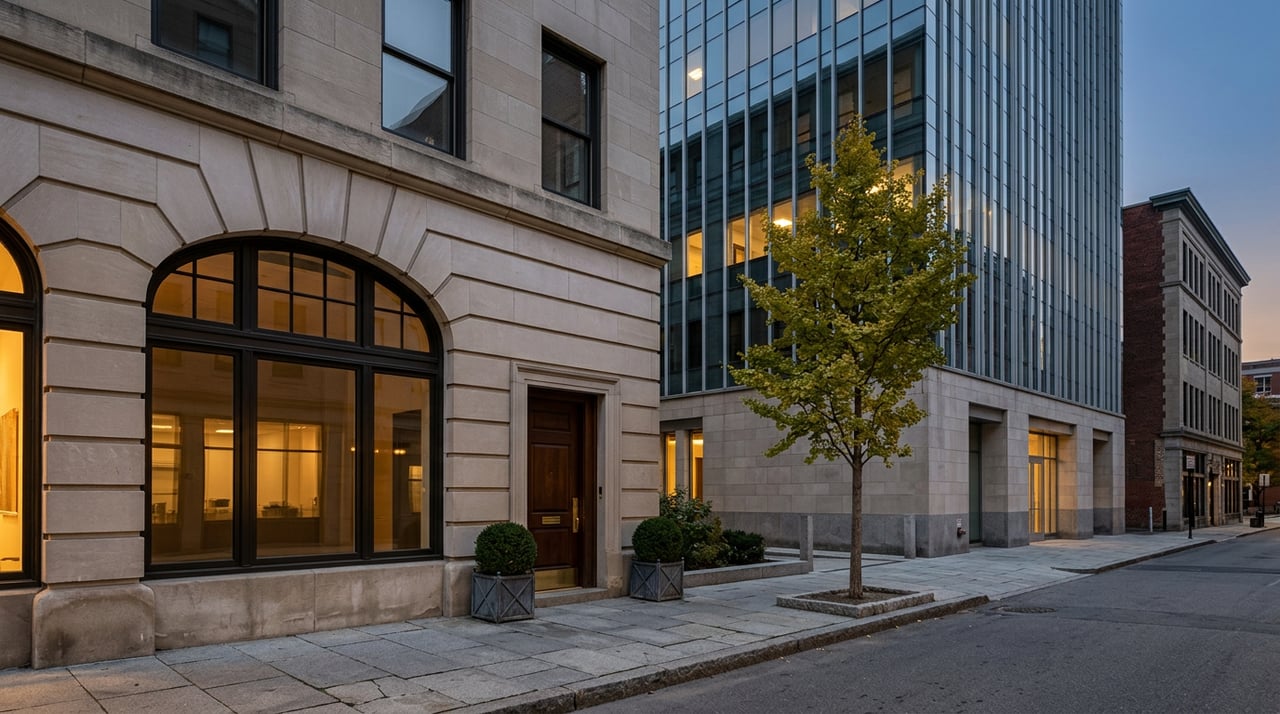
Financial District's 2026 Coolest Neighborhoods Ranking: A Local View
September 24, 2026
September 24, 2026
What does it mean when a global travel magazine that has never spent a Saturday morning at the Fulton Stall Market decides your neighborhood is cool?
This month, Time Out published its 2026 ranking of the 40 coolest neighborhoods in the world, and the Financial District landed at number 28. Only three American neighborhoods made the cut at all: Chinatown in Los Angeles at number 4, West Town in Chicago at number 18, and FiDi trailing at 28. For a patch of Lower Manhattan that spent decades being described as a place bankers left the moment the closing bell rang, that's a real shift in how outsiders see the block. But the list Time Out published and the list FiDi residents are actually working from this fall are not quite the same document, and the gap between them says more about the neighborhood than the ranking itself does.
Time Out's editors evaluated nominees on food and drink, nightlife, independent businesses, livability, and community. What they named to justify FiDi's spot reads like a very specific itinerary: the WSA creative hub spanning 161 Water Street and 180 Maiden Lane, now a magnet for New York Fashion Week events. Printemps, the French department store that opened inside One Wall Street, with its restaurant Maison Passerelle and coffee counter Café Jalu. The new Balloon Museum down at the Seaport. Rooftop dinners at Manhatta and Saga. The cobblestones of Stone Street. Fraunces Tavern, the museum and restaurant at 54 Pearl Street that has anchored that corner since long before anyone was ranking neighborhoods for coolness.
Say it with me: FiDi is cool now.
That's the magazine's own framing, and it's not wrong. But look at what actually made the list: a department store, a museum, two rooftop restaurants built for a view, and a historic tavern that functions as much as a landmark as a place to eat. Every one of those is a destination you visit. None of them is something you build a Tuesday around if you already live six blocks away.
This is the part worth sitting with if you're the kind of person who's lived in FiDi long enough to remember when "no good food" was the neighborhood's whole reputation. The criteria Time Out used include livability and community, but almost everything they cited by name serves a visitor's day, not a resident's week. A department store is a destination. A museum is an outing. A rooftop restaurant is an occasion. That's not a criticism of the ranking. It's just a reminder that a magazine compiling a global list is going to reach for the things that photograph well and read well in a single paragraph, not the things that quietly hold a neighborhood together on a Wednesday in September.
The actual evidence that FiDi has become a place people live, not just visit, is running in parallel to that list right now, mostly unphotographed.
Walk down to the Seaport and the resident-facing version of the neighborhood is easy to find if you know where to look:
None of that appears in the global coolness ranking. All of it is the reason the ranking exists.
What's interesting about FiDi right now is that both versions are true at once, and they're happening inside buildings that sit close enough to share a zip code. Printemps sits inside One Wall Street as a global luxury retailer making its first American bet, the kind of opening a fashion editor flies in for. A few blocks away, Mexi occupies a building that predates the United States itself, built around a menu meant to be eaten on a Tuesday, not photographed for a launch party. One is aimed at people who will visit FiDi once and tell their friends about it. The other is aimed at people who will be back next week because the tortillas are hand-pressed and the salsa is made from scratch that day.
A neighborhood that can support both of those openings in the same stretch of blocks isn't choosing between being a destination and being a place people live. It's doing both, and the Time Out list only had room to describe the half that photographs.
None of this means the ranking is wrong, and it doesn't mean the neighborhood is being oversold. It means the version of FiDi that made a global magazine's list and the version that fills up the Fulton Stall Market on a Saturday morning are two readings of the same set of facts, aimed at two different audiences. If you already live here, the practical takeaway is simple: the Balloon Museum crowd is going to keep growing, Stone Street is going to keep drawing the after-work drinking crowd Time Out mentioned, and Printemps is going to keep pulling people in from other boroughs to see what a Parisian department store looks like on Wall Street. Meanwhile, the Saturday market and Taste of the Seaport's fundraising for the local schools are going to keep running exactly as they have, mostly for the people already here.
Get to Fulton Stall Market before the Balloon Museum line forms around the corner in the afternoon. Get a table at Mexi before word travels the way it has for other new openings a few neighborhoods over. The coolness ranking is a fair headline. The calendar underneath it is the actual neighborhood.
If you're weighing what a shift like this means for property values or timing a move in or out of the Financial District, that's a longer conversation, and one grounded in more than a magazine list. Anna Coatsworth has spent 25 years watching Manhattan neighborhoods earn their reputations the slow way. Request a Confidential Market Consultation when you're ready to talk specifics.


Get assistance in determining the current property value, crafting a competitive offer, negotiating a sale, and much more. Contact me today.